Reflective altruism
I’m a philosopher at Vanderbilt University (views my own). The purpose of this blog is to use academic research to drive positive change within and around the effective altruism movement. Discussions are long-form and structured around thematic series. Subscribe below for biweekly posts.
Home | Start Here | About Me | Navigation | Comment Policy | Stay in Touch
-

Belonging (Part 3: Reform)
Nick Bostrom’s email and subsequent apology have sparked fresh discussions about inclusion and belonging in effective altruism. Who is or can be an effective altruist? Whose voices will be heard? I discuss recent calls for reform and suggest tangible avenues for evidentially-supported improvement.
-

Belonging (Part 2: The tide may be turning)
How has the effective altruist community reacted to Bostrom’s email and apology? Initially, many reactions were not good, but there are signs of improvement. What might we hope for the future to bring, and how can we get there?
-

Belonging (Part 1: That Bostrom email)
In a break from our scheduled programming, I take a look at an email that broke the internet. Warning: contains redacted slurs, unrepentant racism, sexism and profanity.
-

Academics review What we owe the future (Part 2: Chappell liked the book)
Continuing our focus on academic reviews of MacAskill’s What We Owe the Future, let’s look at a review by Richard Chappell. Chappell liked the book.
-

Billionaire philanthropy (Part 2: Philanthropy and democracy)
Many of us believe that public goods should be allocated through democratic decisionmaking. Philanthropists supply badly needed public goods, but do so by circumventing the usual process of democratic decisionmaking. This gives wealthy philanthropists an outsized voice in how public goods are allocated.
-

Existential risk pessimism and the time of perils (Part 6: Wisdom)
So far, we considered two arguments for the Time of Perils Hypothesis: an appeal to space settlement and an existential risk Kuznets curve. In this post, I look at a third argument, which appeals to wisdom.
-

Exaggerating the risks (Part 3: Climate change, lessons from Halstead)
I continue to make the case that estimates of existential risk from climate change have been exaggerated, drawing on a new report about climate risk by John Halstead.
-

Academics review What we owe the future (Part 1: Setiya on moral mathematics)
In this series, I look at academic reactions to MacAskill’s book What we owe the future. Let’s start off by looking at Kieran Setiya’s review, focusing on Setiya’s discussion of the intuition of neutrality in population ethics.
-
Existential risk pessimism and the time of perils (Part 5: An existential risk Kuznets curve?)
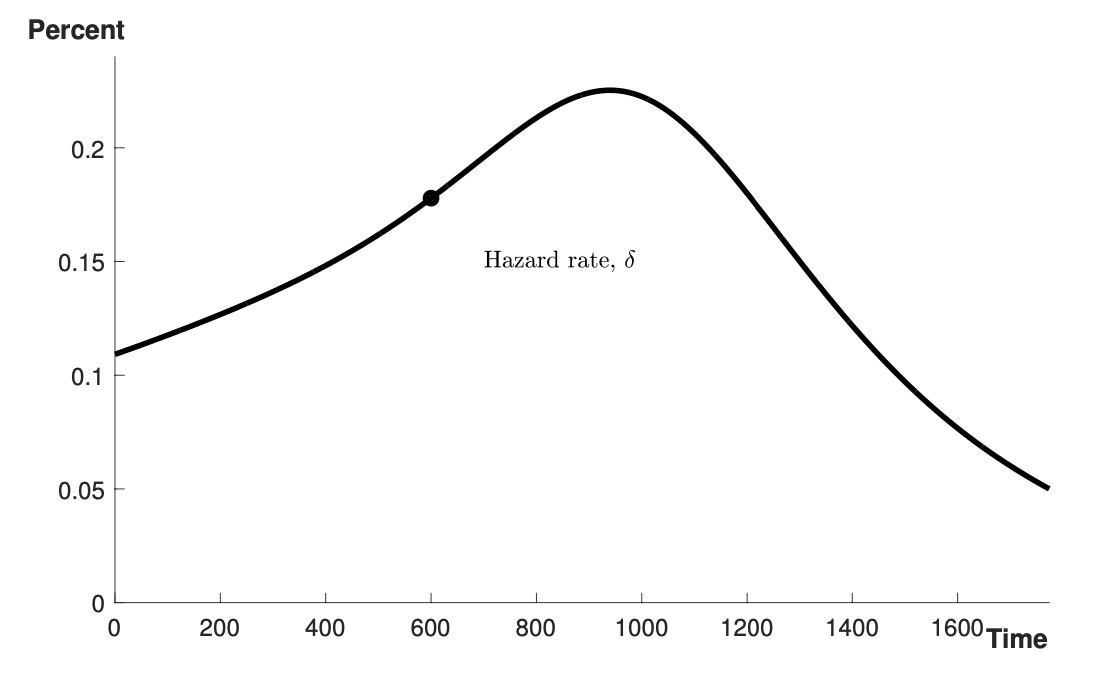
A second argument for the Time of Perils Hypothesis, due to Leopold Aschenbrenner, draws on the idea of an existential risk Kuznets curve. Could this argument vindicate the Time of Perils Hypothesis?
